Advertorial in partnership with Jumpspeak.
I Watched My 67-Year-Old Dad Pick Up Japanese in Six Months. It Changed What I Thought Was Possible.
What most people get wrong about the aging brain.

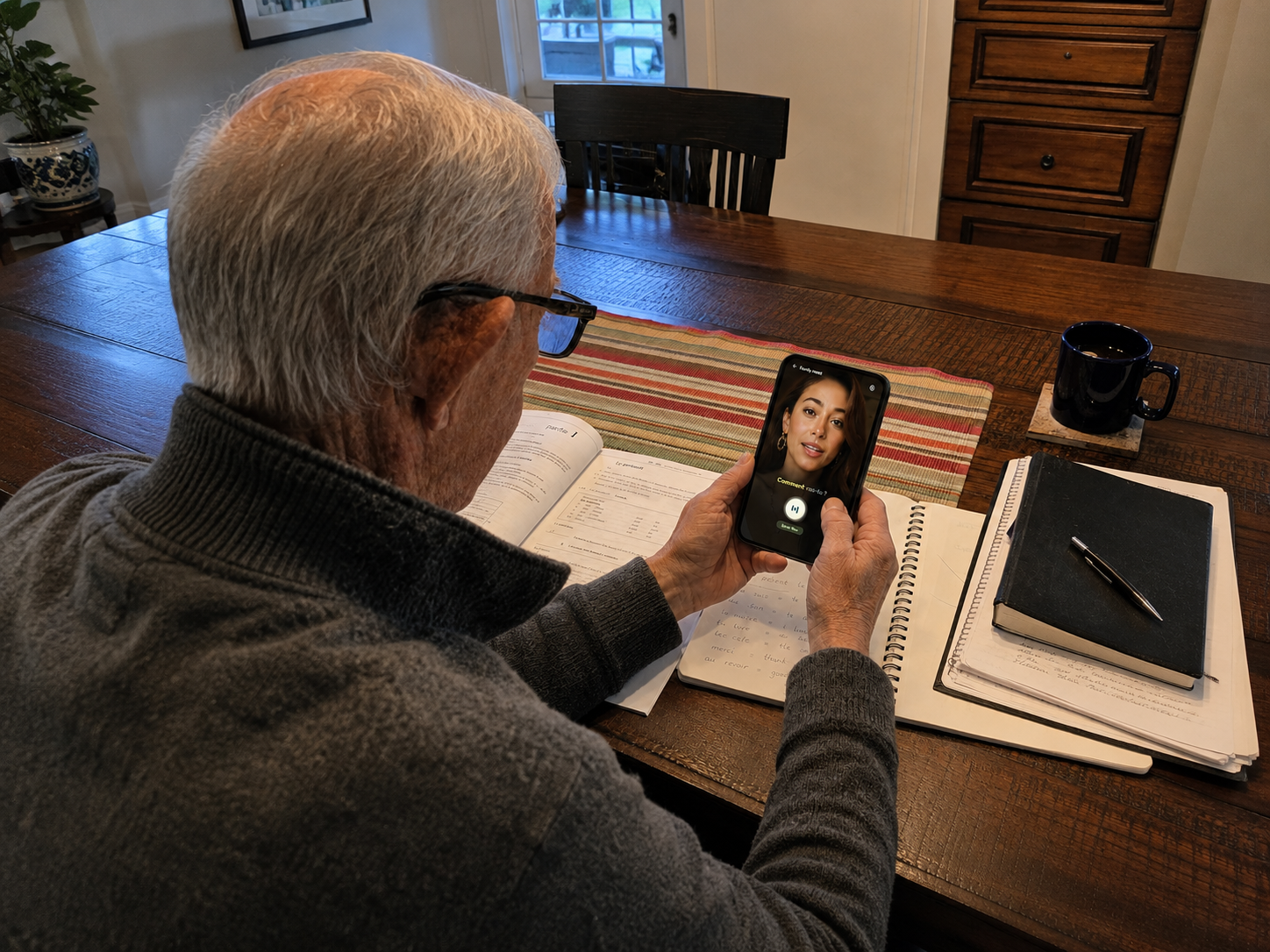
My father turned sixty-seven the year he decided to learn Japanese.
Six months later, I watched him sit on the floor of a small apartment in Kobe and introduce himself, in Japanese, to my wife's father. He stumbled. He paused. He apologized in English twice. But he did it — name, where he was from, that he was happy to finally be sitting in their home. My father-in-law, who is not an emotional man, bowed deeper than I had ever seen him bow, and answered him slowly so my father could follow.
It took maybe three minutes. They didn't say much. My father asked, in careful textbook Japanese, about the bonsai on the windowsill. My father-in-law lit up and told him — slowly, gesturing — that he'd had it for thirty years.
That was the conversation. Three minutes. A bonsai. Two old men leaning toward each other across a low table.
I had to leave the room.
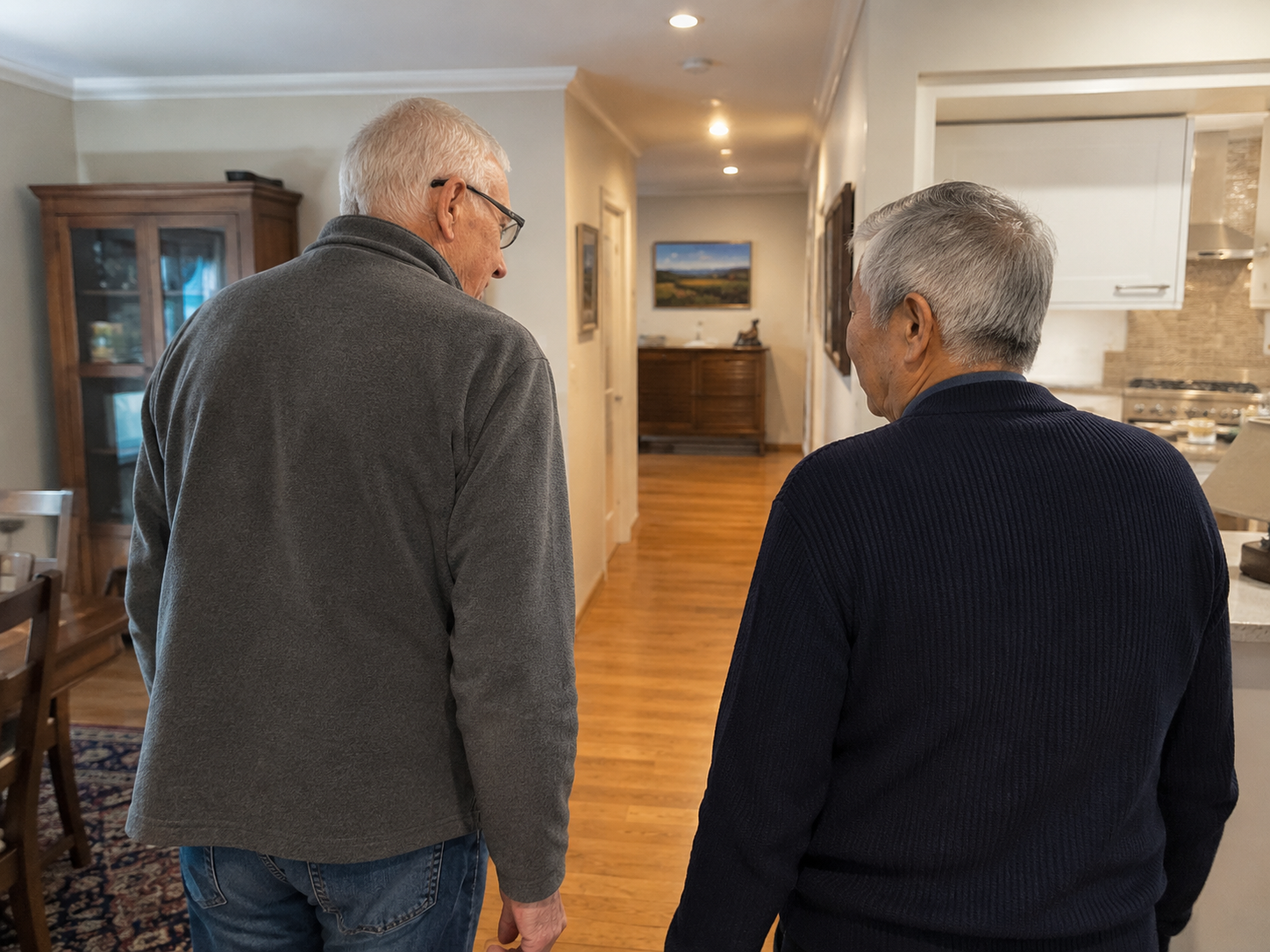
For two days afterward I couldn't stop thinking: how did this happen?
This is the man who hadn't studied a language since high school French in 1975. The man who, two years earlier, had spent his first trip to Japan being walked around politely by my wife while everyone around him spoke a language he couldn't even guess at the edges of. On the plane home that first trip, he'd said something I never forgot.
"I felt like furniture."
He didn't say it bitterly. He said it the way you say something when you've already accepted it.
I think he'd been feeling like furniture in a lot of places, that year. He'd sold his business. His best friend had moved to Arizona. My mother had started a part-time job she loved and he was, by his own description, "rattling around the house." And the calendar that used to be full of meetings had a lot of empty squares on it.
Then one morning in March, he called me and said: "I'm going to try to learn some Japanese before we go back."
I told him that was great. But what I was actually thinking was: please don't get your hopes up.
What I Got Wrong About Older Brains
I'd believed the same thing most of us believe, which is that learning a language gets dramatically harder with age.
It turns out this is mostly wrong, and the part that's right has been wildly overstated.
Past a certain age — roughly puberty — most people can't acquire a perfectly native accent in a new language. That's real. But "perfect accent" and "fluent" are different things.
The broader research is much more encouraging. Older adults have larger vocabularies in their first language. They're better at understanding how they learn, which means they waste less time on methods that don't work for them. They have more patience. And in the specific case of Japanese — a language with no shared vocabulary with English and a writing system most adults find intimidating — patience matters more than reflexes.
What older learners don't have is time to waste. And this, I came to understand, is the actual reason most of them quit. Not because they can't learn. Because the standard methods — textbooks, kanji flashcards, classroom courses designed for university students with four years to spend — make them feel slow and stupid for months before they get to use anything. At sixty-seven, that's not a tolerable trade. You need to be able to do something with the language quickly, or you stop.
The Immersion Method
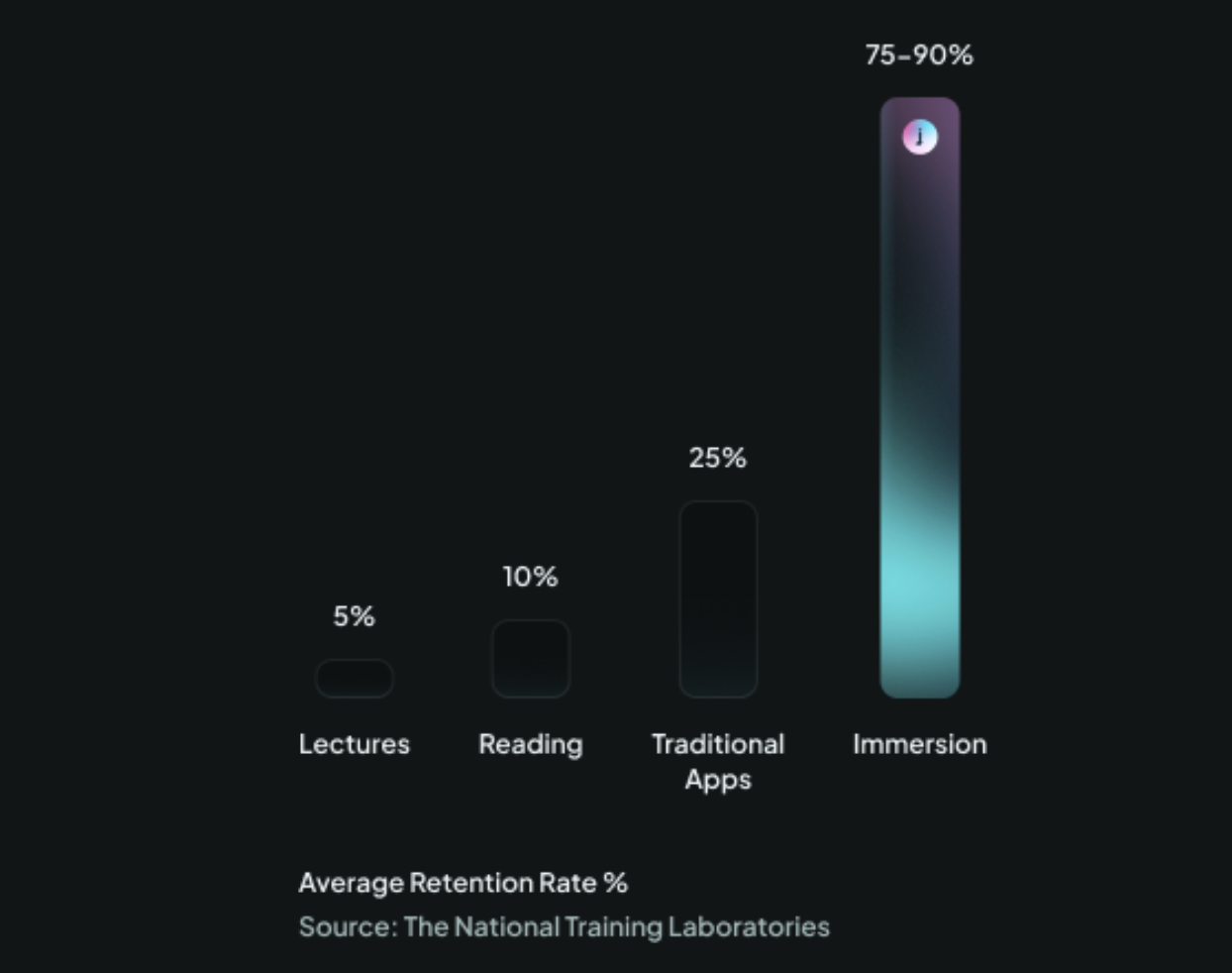
Most language apps teach you to recognize a language. You see a word, you tap the right answer, you feel like you're making progress. The problem is that recognition and production are different skills. You can be very good at recognizing Japanese and completely unable to say anything when a real person is standing in front of you. This was my college French, and probably yours too.
Instead, he used an app called Jumpspeak.
Jumpspeak is built around speaking. From the first lesson, my father was talking out loud, into his phone, in Japanese. The app's AI would respond, correct him when his pronunciation drifted too far off, and push him into slightly harder territory when he was ready. It was patient in a way humans aren't. It didn't care that he repeated the same sentence eleven times trying to get the pitch right. It didn't sigh.
He did twenty minutes every morning. Coffee, kitchen table, phone in his hand, talking to no one in Japanese. My mother told me she'd come downstairs and find him repeating hajimemashite to himself with the same expression he used to have when he was working on the carburetor in their first car.
What he had at the end of six months was not fluency. He would be the first person to tell you this. He had maybe four hundred words, the ability to construct simple present-tense sentences, a passable accent on the phrases he'd practiced most, and — most importantly — the nerve to open his mouth and try. That last part was what we'd flown to Japan to see whether he could do.
The 3-Minute Conversation in Japan
The apartment in Kobe is small. My father-in-law, who is seventy-eight, has lived in it for forty-one years. He doesn't speak English.
My father took off his shoes at the door, walked into the main room, knelt at the low table without being asked — he'd practiced this, my mother told me later, he'd watched a video — and said his name. Then, slowly, that he was happy to be in their home. Then, after a pause where I could see him searching for the words, that he was sorry it had taken him so long to come.
My father-in-law walked over to the tree and started telling the story of it. He spoke slowly enough that my father could follow most of it. Thirty-one years. His own father had given it to him. It had survived a move. It had almost died once. He showed my father the spot on the trunk where it had nearly broken.
It was three minutes. Maybe four. They were not having a deep conversation. My father was using simple Japanese and my father-in-law was speaking to him the way you speak to a child you respect — slowly, clearly, without condescension.
But something was happening that hadn't happened on the first trip. The two of them were in the same room together, in a way they had not been before. My father wasn't furniture. He was a guest who had bothered to learn how to greet his host. And my father-in-law — a quiet man, a careful man — was responding the way men of his generation respond when someone has shown them respect they weren't expecting.
All you need is 20 minutes
My father is not a sentimental man. On the flight home, he said: "I should have done that twenty years ago. I always thought I was too old. The whole time it was just twenty minutes a day."
He wasn't fluent. He'd be the first to tell you that. He could introduce himself, ask a few questions, get through a meal. That was it. But he'd believed for sixty-seven years that he couldn't, and the cost of being wrong was twenty minutes a day for six months.
You don't have to become fluent. You just have to become someone who can say hello. That version of yourself is six months away.
You just have to start speaking.
.png)
Try Jumpspeak for 100 days
Jumpspeak is the speaking-first language app my father used. You can take a free assessment to find out if it's for you, and they'll build you a personalized 100-day plan. 78% of users report to improving their speaking skills in the first 3 weeks, and it's backed by a 100-day money-back guarantee. If you're not having real conversations by then, you don't pay.

I am loving Jumpspeak! Within a week of using it, my Spanish comprehension is improving. The unique thing about this app is that it creates a life-like conversation where you listen, then respond. Just like a real conversation, with AI feedback.

Daniel Dirk

Jumpspeak is something I wish existed for awhile. I first tried Duolingo and it lacked real use cases. With Jumpspeak, you can actively practice real-life conversations, which I must say is a very effective way to learn. I highly recommend Jumpspeak!

Sébastien Lamanna
I used to feel shy & intimidated speaking French to strangers. Jumpspeak has helped me feel more confident within the first month, and it is the best thing I've found to learn a new language. So many other apps use traditional methods, but don't help you speak it.
Yvette Nichols
I tried many different language apps in the past, but I couldn’t speak fluently. Jumpspeak is different because it actually lets me talk and respond like real conversations. After 3 weeks, I already feel more comfortable introducing myself and asking questions in English.
.jpg)
Wendy Wong 🇨🇳
"I went from B1 (Intermediate) to C-level (Advanced) after using Jumpspeak. I saw an immediate difference."
-Jazmine Kempin
"I started as a beginner, and now I can confidently say I'm an Intermediate speaker. This is 100% thanks to Jumpspeak."
-Mark Holmes
"I've honestly tried every language app out there, but Jumpspeak is the most innovative, natural, and conversation-based app I've ever used."
-Dr. Leslie Lundt, MD
AS SEEN ON
The Fluent Report is operated by Growth Studio, LLC. This is advertorial content produced in partnership with Jumpspeak. Individual results vary. Information on this site is for educational purposes and should not be interpreted as medical, legal, or financial advice. By using this site, you agree to our Terms of Service and Privacy Policy.