
Lost in Translation: How AI Translation Actually Works (and Where It Still Breaks)
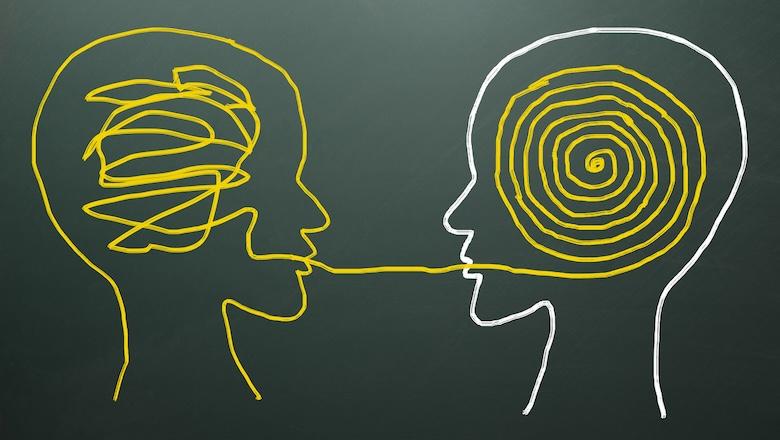

A decade ago, Google Translate was a punchline. Feed it a sentence, get back something that read like a fortune cookie written by a malfunctioning robot. Today, the same tool can produce translations that are nearly indistinguishable from professional human work—at least on the surface. Travelers use it without a second thought. Businesses run global operations through it. Students lean on it to read research in languages they don't speak. The leap from clumsy to fluent happened in just a few years, driven by a single technological shift. But beneath the polished output, AI translation is doing something stranger than understanding language. It's running a sophisticated pattern-matching operation that gets things right most of the time and quietly wrong in ways that matter.
For language learners, this changes the stakes of how you use these tools. AI translation is genuinely useful, but treating it as a fluent bilingual friend can lead you astray in ways that classroom errors never could. What feels like a perfect translation is often a confident guess about meaning. And once you understand the mechanics, AI translation stops feeling like magic—and starts looking like a tool with specific strengths, specific blind spots, and specific consequences for how you learn languages.
Why AI Translation Suddenly Got Good
If you've noticed that translation tools became dramatically better around 2017 and have kept improving since, the reason is a single architectural shift: the move from older statistical methods to transformer-based neural networks.
Earlier translation systems worked by breaking sentences into chunks, looking up probable translations for each chunk, and stitching the result together. The output often sounded mechanical because the system never really considered the sentence as a whole. It was translating in pieces.
Modern systems work differently. A transformer reads the entire input sentence at once, builds an internal representation of what the sentence means in mathematical terms, and then generates the translation in the target language based on that representation.
The key difference is context. The model isn't translating word by word. It's translating meaning by meaning, with every word in the sentence influencing every other word.
This is why translations now flow naturally. The system isn't smarter in any human sense—it just has a better grasp of how language hangs together.
What Happens Inside the Model
When you type a sentence into a modern translation tool, several things happen in rapid sequence.
The text is first broken into tokens—small chunks that the model treats as basic units. These tokens are converted into long lists of numbers called embeddings, which place each token in a high-dimensional mathematical space where similar concepts cluster together.
The model then runs the entire sentence through layers of attention mechanisms, where each token is weighted against every other token. The result is a kind of internal map of the sentence's structure and meaning.
This map is then used to generate the output language token by token, with each new token chosen based on what the model predicts is the most likely next word given everything that came before.
The whole process takes a fraction of a second, but it involves billions of mathematical operations. The fluency you see is the result of those operations producing outputs that closely mirror what a human translator would produce in similar contexts.
Why It Often Sounds Better Than It Is
Modern translation tools have a quality that older systems lacked: fluent confidence. The output reads smoothly. Grammar is clean. Word choice feels natural.
This is partly a feature and partly a trap.
The model is trained to produce text that resembles native-quality writing in the target language, which means it polishes its output even when it's not entirely sure about the meaning. A confused human translator might say "I'm not sure how to translate this" or leave a note. The model just produces fluent text and moves on.
This is sometimes called fluent inaccuracy, and it's one of the most important things to understand about AI translation. The output sounding natural doesn't guarantee that it's correct. The model has no internal sense of doubt to communicate. If it doesn't know the right answer, it produces a confident wrong answer instead.
For high-stakes contexts—medical, legal, contractual, diplomatic—this is genuinely dangerous.
Where AI Translation Excels
For all its limits, AI translation is genuinely good at certain kinds of tasks.
Common, well-documented language pairs—English to Spanish, French, German, Mandarin—work very well, especially for everyday topics. The model has seen enormous amounts of training data in these directions, and the output is reliable for most casual purposes.
Standard prose with clear context translates accurately most of the time. Articles, emails, instructions, and conversational text usually come out clean.
Technical translation in well-known fields—software documentation, common business terms, basic medical vocabulary—is often accurate, because the training data includes large volumes of these exact contexts.
For travelers, learners practicing comprehension, and professionals doing routine cross-language work, AI translation is a tool that genuinely earns its place.
Where AI Translation Quietly Fails
The failure modes are more interesting—and more important to know.
Idioms and figurative language often break. A sentence like "she really threw me under the bus" might come out as a literal translation in another language, producing nonsense. Even sophisticated models struggle with idioms outside the most common languages.
Cultural register and politeness can be flattened. Many languages encode social relationships into grammar—Japanese, Korean, Tagalog, and Tamil all do this in different ways. A translation tool may miss the distinction between speaking to a boss, a friend, or a child, and produce a version that's grammatically correct but socially wrong.
Context across sentences is often lost. The model sees one chunk at a time, which means pronoun references and subtle continuity between paragraphs can get garbled. A character who was "she" in the original may become "he" or "it" in the translation, depending on which target-language assumptions the model makes.
Low-resource languages suffer the most. Languages with smaller online presence—many African, Indigenous, and Pacific languages—have far less training data, and translations to or from them can range from awkward to outright wrong.
Domain-specific terminology outside well-documented fields is a frequent source of errors. Niche scientific, legal, or technical terms may be translated by approximation rather than by accurate equivalents.
These aren't rare edge cases. They show up constantly in real use.
The Hallucination Problem in Translation
One of the strangest failure modes is when AI translation simply invents content.
This happens because the model is trained to produce plausible-sounding text. When it encounters something it doesn't fully understand—a name, a rare word, a complex grammatical structure—it sometimes fills in the gap with a confident guess.
Translators have reported AI tools inventing entire sentences that weren't in the original. Adding clauses that don't exist. Changing dates and numbers. Substituting one named entity for another that sounds similar.
These errors are dangerous precisely because the surrounding text is fluent. There's nothing visually flagging the invented content. A reader who doesn't speak the source language has no way of knowing which parts are real translation and which parts are fabricated.
This is one reason professional translators are still essential for any high-stakes work. Not because AI is useless, but because it can fail invisibly.
Why This Matters for Language Learners
For language learners, AI translation creates a complicated relationship.
Used wisely, it can be a powerful tool. Looking up a phrase you don't understand. Checking your output against what a model would produce. Reading articles or books in your target language with translation as a backup. Practicing rephrasing by translating back and forth.
Used unwisely, it can become a crutch that prevents real learning. If you reach for translation every time you encounter difficulty, your brain never has to do the hard work of figuring out meaning from context. The struggle is part of the learning. Outsourcing it removes the very challenge that builds fluency.
There's also a subtler problem. AI translation can create a false sense of communication ability. Learners who rely on it may believe they're more fluent than they are, because the tool has been doing the heavy lifting silently.
The best approach is to treat AI translation as a reference, not a replacement.
How to Use AI Translation Responsibly
A few practical principles make a real difference.
Use it to confirm understanding, not to generate output you couldn't produce yourself. Translation as a check is healthy. Translation as a replacement for thinking is corrosive to learning.
Verify high-stakes content with a human or a second tool. If the translation matters—legal, medical, professional—don't trust a single AI output.
Be especially cautious with idioms, names, and culturally loaded language. These are the most common failure points.
Pay attention to the languages you're working with. Translation between widely-spoken language pairs is far more reliable than translation involving low-resource languages.
Learn enough of the language to spot obvious errors. Even basic competence dramatically reduces the risk of being misled by fluent inaccuracy.
The tool is powerful, but it's not neutral. Used thoughtfully, it accelerates learning. Used carelessly, it slows it down or distorts it.
What This Reveals About Language
The deeper insight from AI translation isn't about technology. It's about how much of language is genuinely translatable, and how much isn't.
Modern models can capture meaning at a level that astonishes anyone who remembers older systems. But they still struggle with the parts of language that are tied to context, culture, social relationships, and lived experience.
These aren't edge cases of language. They're the heart of it.
This is why fluent humans are still the gold standard for translation that really matters. Not because AI is bad, but because language is more than information transfer. It's relationship, culture, and identity, encoded in patterns no model has fully cracked.
A Smarter Way to Live Between Languages
When you understand what AI translation actually does, your relationship with it becomes clearer.
Focus on:
- Treating translation output as a draft, not a final answer
- Using AI to support learning, not replace it
- Verifying anything important across multiple sources
- Recognizing fluent text isn't proof of accurate text
- Building enough real language ability to spot the model's mistakes
The instinct to trust polished output fights against how these systems actually work. A mechanism-based view treats translation as a tool with edges.
Translation Is Closer Than Ever and Still Not Done
For all the progress, translation remains a problem AI hasn't fully solved—and may never fully solve. Languages aren't just codes to be converted. They're worlds, shaped by everything from history to humor to social hierarchy to physical environment.
A model that's trained on text can come remarkably close to translating that world. But it can't live in it. It can't know what it's like to grow up speaking the language, to feel a phrase land, to recognize the thousand subtle ways meaning shifts in real human use.
And that's the shift: from seeing AI translation as a finished solution to seeing it as a powerful tool with real limits, especially for the parts of language that matter most.
Because once you understand how these systems actually work, you stop using them like fluent friends—and start using them like very smart, very confident, very careful-to-double-check assistants.