
The Strange Sense: Why Smell Is Wired Completely Differently Than Everything Else
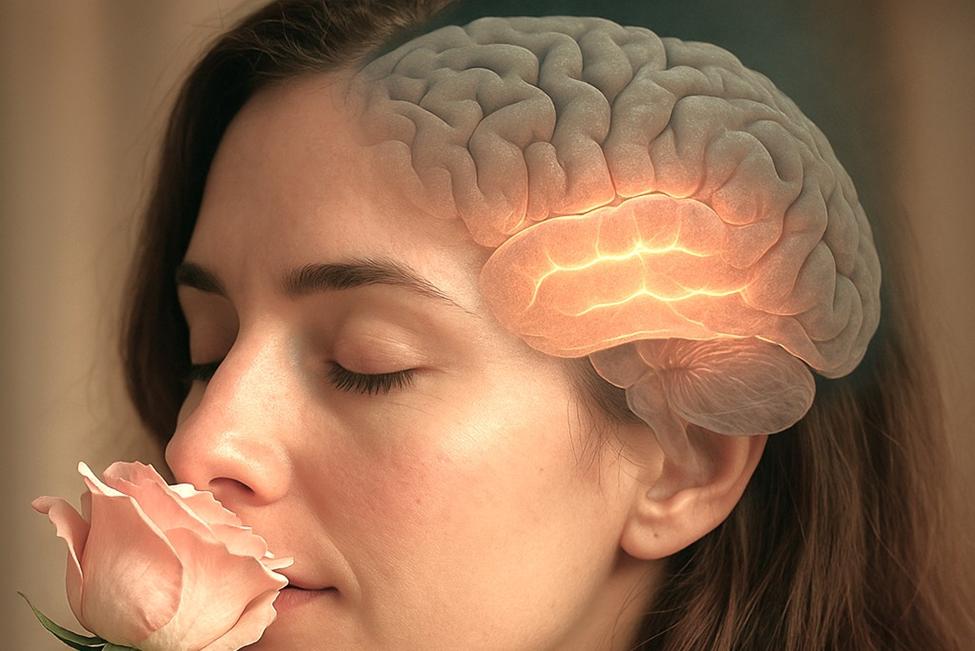

You walk past a bakery and suddenly you're seven years old, standing in your grandmother's kitchen. The memory hits before you've even identified what you're smelling. There's no thinking, no recognition step—just instant transport. For most people, smell is the only sense that does this. Hearing an old song reminds you of the past, but it doesn't drag you backward in time. Seeing a familiar place is meaningful, but it doesn't bypass your conscious mind. Smell does. And for a long time, scientists couldn't figure out why. The answer turns out to be one of the most fascinating quirks in human neuroscience: smell is wired into the brain in a fundamentally different way than every other sense.
This isn't a small distinction. Sight, sound, touch, and taste all follow a similar neural path—they pass through a kind of central relay station before reaching higher brain regions. Smell skips it. Smell is the only sense that has direct access to the parts of the brain responsible for emotion and memory. What feels like an unusually powerful kind of nostalgia is actually the result of an evolutionary shortcut. And once you understand the wiring, the strange power of smell stops being mysterious—and starts revealing how memory, emotion, and identity are stitched together.
Why Smell Hits Different
If you've ever wondered why a single whiff of something can collapse decades and put you back in a specific moment, the answer is anatomical.
Most senses follow a predictable route in the brain. Light, sound, touch, and taste all enter the brain and travel through a structure called the thalamus, which acts like a central switchboard. The thalamus filters incoming signals, decides what's important, and routes them to the appropriate higher brain regions for processing.
This switchboard is part of why most experiences feel slightly buffered. By the time you consciously perceive a sight or sound, it's already been filtered, contextualized, and labeled.
Smell doesn't go through any of that.
Olfactory signals enter the brain and travel directly into the limbic system—specifically the amygdala (emotion) and hippocampus (memory)—before higher cognitive areas have a chance to process them.
The result is that you feel a smell before you understand it.
The Evolutionary Shortcut
This unusual wiring isn't a glitch. It's a holdover from a time when smell was the most important sense for survival.
For early mammals, before vision and hearing became dominant, olfaction was the primary system for detecting food, mates, predators, and disease. Speed mattered. A creature that smelled a predator and had to wait for the signal to be filtered through several brain regions would be dead before it ran.
So evolution did something efficient. It plugged smell directly into the brain regions that drive emotional and memory responses, bypassing the slower cognitive analysis stage.
The downstream effect, millions of years later, is that humans still have this primitive shortcut. We've gained sophisticated language, abstract thought, and complex visual processing—but our olfactory wiring is still functioning the way it did when our ancestors needed it for raw survival.
This is why smell triggers feelings before thoughts.
The Proust Effect
The phenomenon of smell-evoked memory is so striking that it has its own name in psychology: the Proust effect, named after the French novelist who famously described being transported to childhood by the smell of a tea-soaked madeleine.
Studies have confirmed the effect is real and measurable. Smell-evoked memories are more emotional, more vivid, and more likely to involve the first decade of life than memories triggered by any other sense.
Visual cues tend to bring up memories from teenage and adult years. Auditory cues do something similar. But smell consistently pulls memories from very early childhood—often from before the age of ten.
The reason is timing. By the time most other autobiographical memory systems mature, smell has already been doing its work for years. The earliest memories you have of certain smells were laid down when smell was one of your most active senses, and those memories are still wired in.
Why You Forget Smells, Then Remember Them Instantly
Smell has another strange property: poor active recall, perfect recognition.
If someone asks you to describe what coffee smells like, or to mentally summon the smell of fresh-cut grass, most people struggle. The smell doesn't appear on demand the way an image or a song can.
But the moment you encounter the actual smell, recognition is immediate and total. You don't search for it. You don't compare it to options. You just know.
This is because smell memory is stored differently than other sensory memories. It's less verbal, less abstract, and more deeply tied to emotional and contextual associations. You can't pull it up consciously, but the right cue activates it instantly.
This is one reason perfumes are so emotionally powerful. They're keys, not images.
Smell, Emotion, and the Speed of Feeling
Because smell connects directly to the amygdala, smells often trigger emotional reactions before we've identified what we're smelling.
You might walk into a room and feel uneasy, only to realize a moment later that the room smells like a hospital you visited as a child. Or feel a wave of comfort and only later notice that someone is wearing the same cologne as your father.
The emotion arrives first. The recognition catches up second.
This explains why smells are so often used in therapeutic contexts—aromatherapy, scent association in trauma processing, calming routines anchored to specific perfumes. The smells aren't doing the emotional work because they smell good. They're doing it because they're talking directly to the part of the brain that handles emotion.
Why Some People Don't Experience This
About one in twenty people have a condition called anosmia, meaning they can't smell at all. Either they were born without the sense or they lost it through illness, injury, or, more recently, COVID-19.
For people who lose smell later in life, one of the most reported losses isn't about food or perfume. It's about memory. They describe feeling disconnected from their own past—as if a layer of their experience has gone quiet.
Studies have confirmed that anosmia is associated with depression, social withdrawal, and a sense of emotional flatness, beyond what you'd expect from losing a single sensory channel. This is part of why olfactory loss is now treated as a serious medical concern, not just an inconvenience.
When you lose smell, you don't just lose information. You lose part of how you connect to time and feeling.
The Cultural Side of Smell
Smell is also more cultural than people realize. The smells that evoke comfort, danger, or longing aren't universal—they're shaped by what you grew up around.
For someone raised in Manila, the smell of garlic frying in oil might be home. For someone raised in Mexico, it might be corn tortillas warming on a comal. For someone raised in Mumbai, it might be cardamom or incense. None of these are inherently emotional. They become emotional through repeated exposure during the years when olfactory wiring is being laid down.
This is also why traveling can feel disorienting in a way that's hard to explain. Different countries have different smell signatures—different soaps, foods, plants, infrastructure. The unfamiliar olfactory landscape doesn't trigger your normal memory networks, which can leave you feeling subtly out of place even when everything else is fine.
Your nose is a quiet calibration device for what feels like home.
What Smell Reveals About Memory
The more researchers study smell, the more it reframes how memory is understood.
Memory isn't a single system. It's a layered network, with different sensory channels feeding into different storage and retrieval pathways. Visual memory is highly verbal and conscious. Auditory memory is rhythmic and pattern-based. Smell memory is emotional and pre-cognitive.
This is why some memories feel like stories you're telling yourself, while others feel like something happening to you. Visual memories can be retold. Smell memories can only be re-experienced.
Understanding this changes how you think about the past. Some of your deepest memories aren't accessible through thinking. They're only accessible through encounter.
A Smarter Way to Use Your Sense of Smell
When you understand how smell actually works in the brain, you can engage with it more intentionally.
Focus on:
- Treating smell as a memory tool, not just a sensory input
- Building scent associations with experiences you want to remember
- Recognizing emotional reactions that may be smell-driven before they're conscious
- Protecting your sense of smell as an emotional resource, not just a practical one
- Letting unfamiliar smells be part of how you adapt to new environments
The instinct to underrate smell as the least important sense ignores how deeply it shapes experience. A wiring-based view treats it as central, not peripheral.
The Sense That Remembers For You
For all the focus on vision and hearing, the deeper truth is that smell may be the most quietly powerful sense humans have. It bypasses the cognitive layer entirely. It bonds with emotion before language gets involved. It carries pieces of your past you didn't even know you'd kept.
A smell from your childhood isn't just a memory cue. It's a key to a part of you that doesn't speak in words.
And that's the shift: from treating smell as background information to treating it as a parallel memory system, running underneath the rest of your experience.
Because once you understand how smell is actually wired, you stop being surprised that a single scent can rewrite the whole moment—and start realizing how much of who you are is held in your nose.